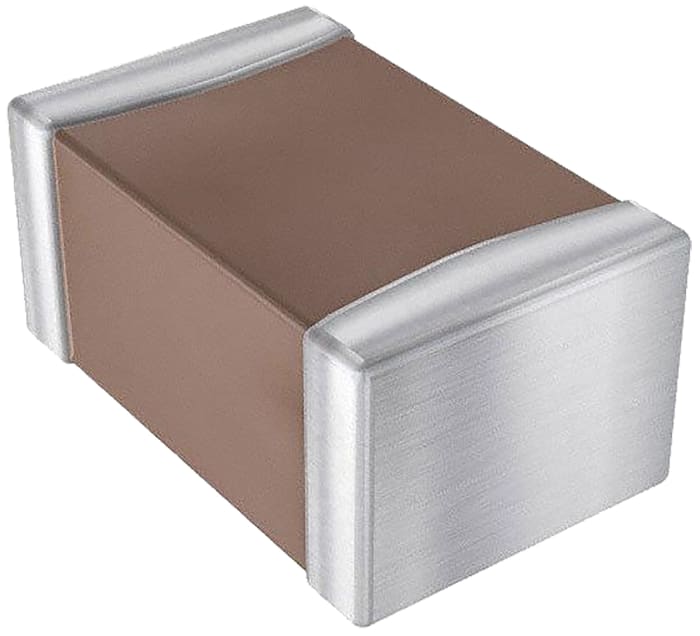
Condensateur céramique multicouche MLCC, CMS, 15nF, 100V c.c., ±10%, diélectrique : X7R

Documents techniques
Spécifications
Brand
AVXCapacité
15nF
Tension
100V dc
Boîtier
0805 (2012M)
Type de fixation
Surface Mount
Diélectrique
X7R
Tolérance
±10%
Dimensions
2.01 x 1.25 x 0.94mm
Longueur
2.01mm
Profondeur
1.25mm
Hauteur
0.94mm
Classe de suppression
Class II
Température de fonctionnement maximale
+125°C
Température d'utilisation minimum
-55°C
Type de raccordement
Surface Mount
Pays d'origine
United States
Détails du produit
AVX ESR très faible série 0805
0805 Range
Nickel barrier terminations covered with a layer of plated Tin (NiSn). Applications include mobile phones, video and tuner designs, COG/NPO is the most popular formulation of the "temperature compensating", EIA Class I ceramic materials, X7R, X5R formulations are called "temperature stable" ceramics and fall into the EIA Class II materials, Y5V, Z5U formulations are for general purpose use in a limited temperature range, EIA Class II materials; these characteristics are ideal for decoupling applications.
Les informations sur le stock sont temporairement indisponibles.
Prix sur demande
1
Prix sur demande
Les informations sur le stock sont temporairement indisponibles.
1
Documents techniques
Spécifications
Brand
AVXCapacité
15nF
Tension
100V dc
Boîtier
0805 (2012M)
Type de fixation
Surface Mount
Diélectrique
X7R
Tolérance
±10%
Dimensions
2.01 x 1.25 x 0.94mm
Longueur
2.01mm
Profondeur
1.25mm
Hauteur
0.94mm
Classe de suppression
Class II
Température de fonctionnement maximale
+125°C
Température d'utilisation minimum
-55°C
Type de raccordement
Surface Mount
Pays d'origine
United States
Détails du produit
AVX ESR très faible série 0805
0805 Range
Nickel barrier terminations covered with a layer of plated Tin (NiSn). Applications include mobile phones, video and tuner designs, COG/NPO is the most popular formulation of the "temperature compensating", EIA Class I ceramic materials, X7R, X5R formulations are called "temperature stable" ceramics and fall into the EIA Class II materials, Y5V, Z5U formulations are for general purpose use in a limited temperature range, EIA Class II materials; these characteristics are ideal for decoupling applications.